
Social trend 03
Adaptive belonging
Adaptive belonging
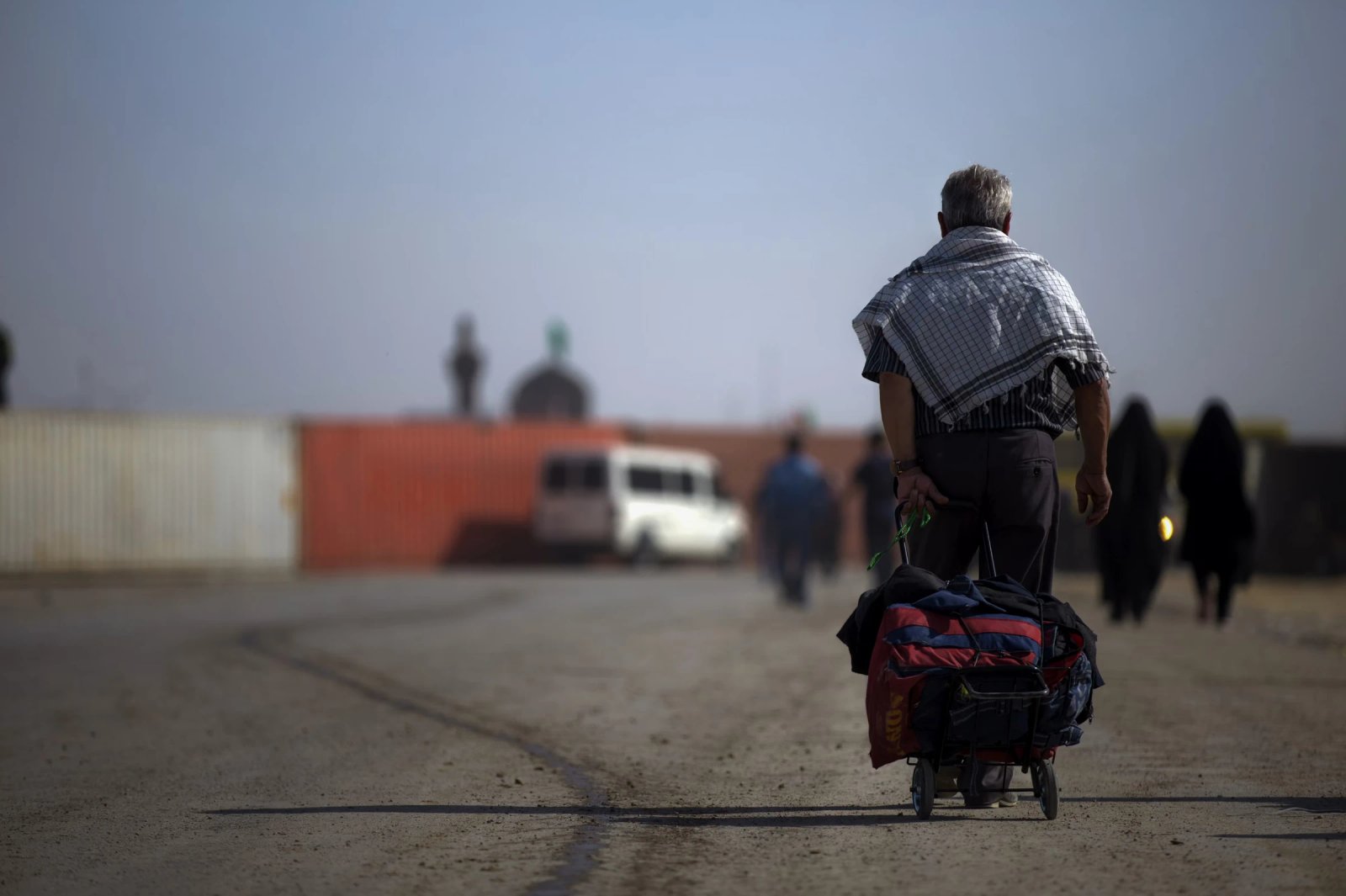
Growing migration flows are creating more dynamic communities and mobile societies where new forms of integration, participation and collective building are taking shape.
Trend axes
- Access equality
- Social integration
- Integration models
- Inclusive communities
Some figures
500,000
Migrants benefiting from the extraordinary regularisation approved by Spain’s Ministry of Inclusion, Social Security and Migration for 2026.
9M
People Trump promised to deport during his term. In his first year, 675,000 were deported, according to the US Department of Homeland Security.
25%
Share of GDP growth contributed by the migrant population in 2025, according to data from the Bank of Spain, with more than 3 million people registered with Social Security.
304M
People live outside their country of birth, accounting for 4% of the world’s population, according to the International Organization for Migration.

Fluid communities
Belonging no longer works as a fixed coordinate anchored to a territory. Instead, it takes shape as a dynamic process shaped by constant movement. The sustained rise in migration flows, together with the expansion of digital environments, has blurred traditional forms of community. Today, ties no longer depend solely on physical proximity; they form around networks that connect cultural experiences and scattered life paths.
Composite identities are emerging as a result, in which references to origin and destination are no longer mutually exclusive categories. As rootedness fades, the local intertwines with the transnational in shifting groups, in hyperconnected diasporas and forms of participation that combine the in-person and the distributed. Belonging is negotiated across multiple scales and moments and becomes situational.
Here, consumption takes on a relational dimension. Food, fashion and language work as tools of cultural mediation and as codes of recognition. Consumers demand more complex representations that reflect diverse experiences without reducing them to stereotypes.
Some organisations are exploring hybrid spaces that bring diverse communities together. However, cultural superficiality emerges as a clear risk and calls for a process of understanding and coherence.
It is a scenario in which the idea of the nation shifts and is expressed as an expanding network. Far from fading, identities are transforming, projecting outward and taking on new forms of presence; cultural territories are emerging that extend and redraw their own borders.
Cases
01 / 10A hierarchy of belonging
When belonging stops being a stable framework, its political and social nature changes too. Belonging is no longer granted, or even guaranteed; it is built, proven and, above all, negotiated. In this transition, while some life paths are shaped by the freedom to choose cultural experiences, others are marked by the urgency of adapting to survive.
The difference between cultural capital and vulnerability thus becomes a decisive factor. Living in transit means inhabiting an identity that is never fixed and adjusts to context and resources.
Likewise, the expansion of global networks has increased the possibilities for connection, but it has also fragmented common space. The coexistence of multiple communities does not always lead to integration and often creates niches that barely touch.
In this context, patriotic responses seeking to restore boundaries are emerging, pulling identity back into more rigid and exclusionary forms.
Yet the underlying question is not just who belongs, but on what terms that belonging is recognised. When inclusion becomes a symbolic or economic resource, it risks being emptied of meaning. Without genuine openness, institutional, cultural and everyday, adaptation stops being an opportunity and becomes a one-sided demand.
Contemporary nationhood is decided by the ability to sustain shared spaces where difference is not a threshold for exclusion but becomes a starting point for building new common norms.
Zorraquino spotlights
- 01
Migration redraws the map of belonging and forces people to operate within several social and cultural frameworks at once, so that identity is no longer a single, stable reference point.
- 02
Societies are no longer made up of closed cultural blocs but are based on individual paths that combine diverse realities, making it harder to apply traditional models of integration.
- 03
Belonging starts to take shape on the margins of institutions, through informal networks, hybrid communities and everyday spaces where real recognition is negotiated.
- 04
The debate is no longer centred on inclusion or exclusion. The tension lies between visibility and recognition: being seen does not necessarily mean being accepted.
- 05
Consumption gains relevance because it offers immediate codes of access, but that same speed also limits its depth as a means of integration.
- 06
The challenge goes beyond integrating all migrants; it lies in building shared frameworks able to sustain diverse identities without requiring them to become uniform.
Zorraquino playlist
- Somos Más AmericanosLos Tigres Del Norte · 2011
- ClandestinoSombra Alor · 2025
- Yalah Yalah RamallahFermin Muguruza · 2009
More on the trend
References
- La regularización extraordinaria de personas migrantes en España: preguntas y respuestas
- Los operativos del ICE, en el punto de mira: “Trabajó 35 años para conseguir los papeles. Murió antes de recibirlos”
- El peso económico de la inmigración en la economía
- El 4 % de la población mundial, 304 millones, vive fuera de su país de origen
- “Capítulos de Esperanza”: la campaña que propone las bibliotecas y la lectura como prueba de arraigo
- Donald Trump presenta nuevo pasaporte de EE. UU. con su foto
- eSims para Gaza
- La nación que ya no cabe en su territorio
- Ocho años, un país distinto: cómo la inmigración pasó de ser un tema marginal a una obsesión nacional
- Welcome back, Paisano
- @MGMIGUELGARCIA
- Open Arms representa el drama de la migración en “3 días, 3 noches”
- Centro Cultural Villas de San Pablo
- AUSTRALIA POST CONNECTS ALL 2,655 POSTCODES IN NATIONWIDE BRAND CAMPAIGN FROM DROGA5 ANZ
- A videogame experience about the 1948 Nakba, based on a true story.
- Lush partners with Migrants’ Rights Network to challenge division and stand for justice
- La tienda de Goya que se hace de oro con ‘merchandising’ de Ceuta: “Toda España está con ellos”
Pages 86–114 of the report